Banggar: A Versatile and Elegant Font for Professional Design
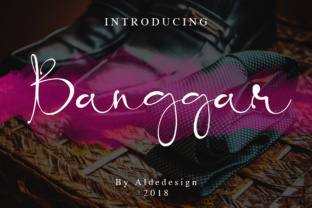
Banggar is a modern font family that offers a clean, sophisticated aesthetic suitable for a wide range of design applications. It comes in two primary styles: regular and slant, providing flexibility for different visual needs. The font's design balances simplicity with elegance, making it an appealing choice for professionals who value both readability and style.
What Makes Banggar Unique?
Banggar stands out due to its balanced structure and subtle details that enhance its visual appeal without complicating the overall look. The font maintains a high level of legibility, even at smaller sizes, which is essential for text-heavy projects. Its minimalist approach ensures that it doesn't overpower the content it supports, allowing other design elements to shine.
The slant version of Banggar adds a dynamic feel, making it ideal for headings, logos, or any project where a touch of movement is desired. This variation can create a sense of energy or modernity, depending on how it's used. Both versions of Banggar are designed with consistency in mind, ensuring that they work well together in multi-style projects.
Comparing Banggar to Similar Fonts
When evaluating fonts like Banggar, it's helpful to consider alternatives that serve similar purposes. Many sans-serif fonts offer a comparable level of simplicity and elegance, but few match Banggar’s combination of readability and stylistic versatility. For instance, fonts like Lato or Montserrat are widely used for their clean lines and professional appearance, but they may lack the distinct character that Banggar provides.
In contrast, more decorative or script-based fonts often prioritize aesthetics over functionality. While these can be visually striking, they may not be as practical for long-form text or formal designs. Banggar strikes a middle ground, offering a polished look that remains easy to read across different mediums and sizes.
Strengths and Best Use Cases for Banggar
Banggar excels in situations where clarity and sophistication are important. Its clean design makes it well-suited for business cards, where a professional yet approachable look is essential. It also works well for album covers, where a strong visual identity is needed without overwhelming the viewer.
The font’s versatility extends to digital media as well. Whether used in web design, app interfaces, or social media graphics, Banggar maintains a cohesive and modern appearance. Its slant variant can add a unique flair to headlines or branding elements, helping to differentiate a project from others using more standard typefaces.
For designers working on quotes, banners, or signage, Banggar offers a reliable option that balances style with usability. Its consistent stroke widths and even spacing contribute to a harmonious visual rhythm, which is crucial for maintaining a polished look in any design.
Tradeoffs and Limitations
While Banggar is a strong choice for many applications, it may not be the best fit for every project. Its minimalistic design, while elegant, might not provide enough distinction for projects that require a more distinctive or bold typographic presence. In such cases, a more ornate or stylized font could be more appropriate.
Additionally, Banggar’s simplicity may not appeal to all audiences. Some users might find it too plain or unexciting compared to more expressive typefaces. However, this characteristic can also be seen as a strength, as it allows the font to blend seamlessly into a variety of design contexts without drawing undue attention to itself.
Another consideration is the availability of Banggar in different weights or variations. While the regular and slant versions are useful, the absence of additional weights may limit its application in certain design scenarios. Users who require a broader range of typographic options may need to supplement Banggar with other fonts to achieve the desired effect.
When Banggar Is the Right Choice
Banggar is particularly well-suited for projects that emphasize professionalism, clarity, and modernity. It is an excellent option for businesses looking to establish a clean and trustworthy brand image. Its use in signatures, watermarking, or logo designs can add a refined touch that enhances the overall presentation.
For photographers or artists seeking a subtle yet stylish way to brand their work, Banggar Signature offers a tailored solution. This variant is designed to complement visual art while maintaining a level of sophistication that aligns with creative industries.
Designers who prioritize efficiency and ease of use will appreciate Banggar’s straightforward design. It requires minimal adjustments to work effectively across different platforms and formats, making it a practical choice for those with tight deadlines or limited resources.
When to Consider Alternatives
If a project demands a more dramatic or eye-catching typographic style, alternative fonts may be more suitable. For example, a custom script font could add a personal touch to a signature or logo, while a bold serif font might provide the necessary weight for a headline in a print publication.
For highly specialized applications, such as large-scale signage or complex layouts, a font with greater typographic flexibility may be necessary. In these cases, designers should evaluate whether Banggar’s limitations in weight variation or stylistic diversity could impact the final outcome.
Ultimately, the decision to use Banggar or an alternative depends on the specific goals of the project. By understanding the strengths and limitations of different fonts, designers can make informed choices that align with their creative and functional needs.
Conclusion: Making an Informed Decision
Banggar is a versatile and elegant font that offers a balanced approach to typography. Its clean design, readability, and adaptability make it a solid choice for a wide range of applications. Whether used in digital or print formats, Banggar can enhance the visual appeal of a project without compromising clarity or professionalism.
However, like any tool, its effectiveness depends on how well it fits the needs of the user. By considering factors such as design goals, audience expectations, and technical requirements, designers can determine whether Banggar is the right option or if another font might better suit their needs.